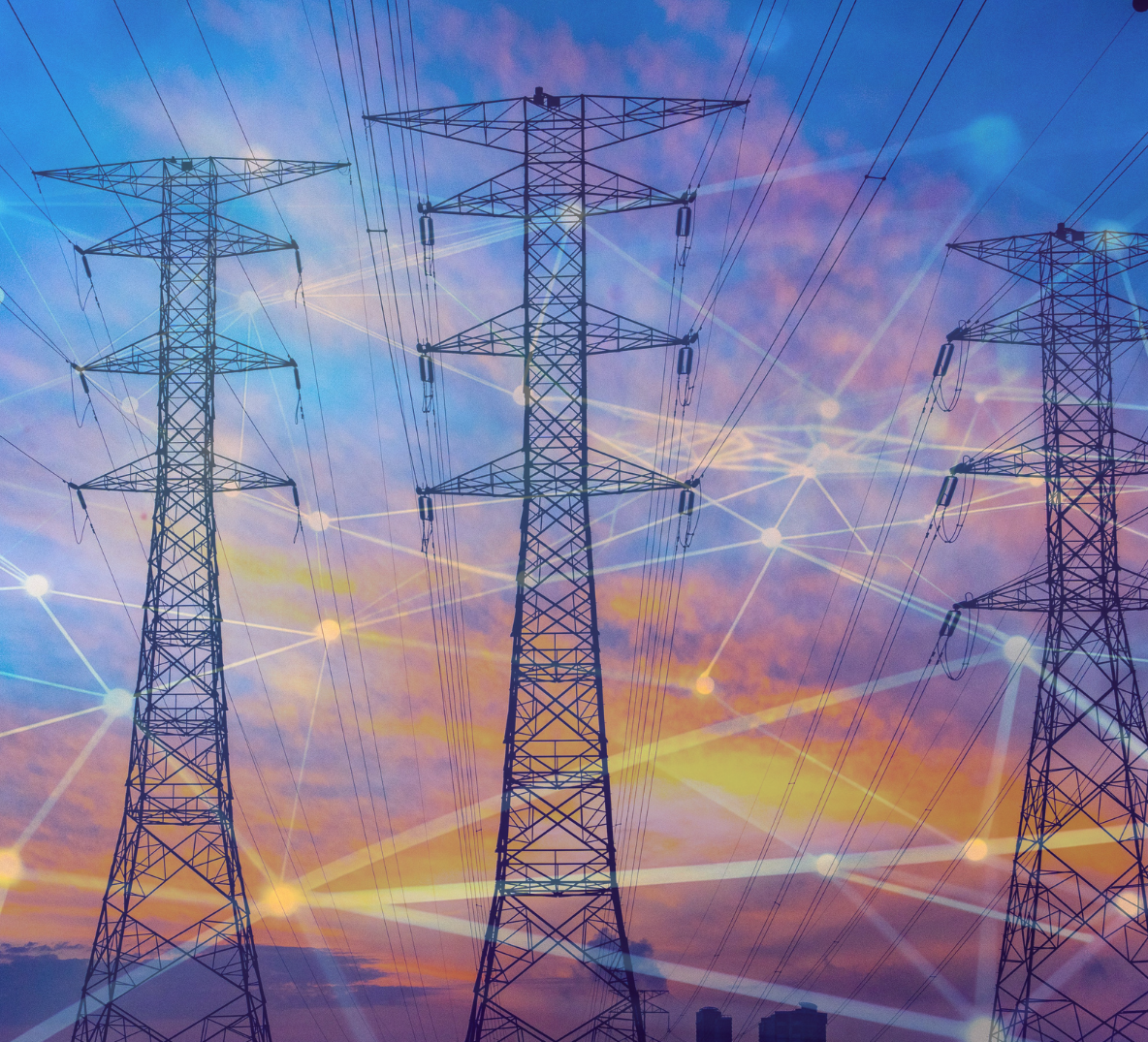
The Belgian energy world is under high voltage. We are building massive offshore wind farms, installing solar panels on every free roof and switching en masse to electric driving. But while the infrastructure is creaking under this lightning-fast change, the sector is struggling with the impending outflow of decades of practical experience and a tidal wave of new data. How do we keep our grid stable yet affordable? We believe the answer lies largely in the smart use of that (available) data.
The Flemish context: A system under high voltage
Flanders is in a critical phase of the energy transition. The urgency of the digital transformation is demonstrated by recent figures from Voka: by 2026, as many as 181 Flemish companies cannot be directly connected because the power grid is saturated. Since 2020, the number of requests for a grid connection has quadrupled at Fluvius (medium and low voltage) and even increased sixfold at Elia (high voltage). So what we call "grid congestion" is no longer an abstract future scenario, but a real economic challenge that directly pressures the growth of our businesses.
This 'grid congestion' is caused by the explosive demand from data centers and the accelerated electrification of our industry, vehicles and heating. The pressure is nowhere more palpable than at the interconnection points between the high-voltage grid (Elia) and the medium-voltage grid (Fluvius). Just one data center there can demand half the capacity of a standard transformer. Today, 16 of the 235 crucial nodes already face acute capacity pressure.
1. Predictive accuracy in a volatile market.
The integration of variable renewable energy sources, such as solar and wind, makes generation patterns less predictable. This is a huge challenge, because to keep our power grid stable, generation and consumption must be perfectly balanced at all times. According to Elia figures, by 2028 we expect offshore wind power to fluctuate by up to 2.5 GW within a single hour, a volume equivalent to the output of several nuclear power plants. If we do not accurately predict these fluctuations, we risk instability on the grid or having to start up expensive backup plants to make up for the shortfall.
Classical computer models work according to fixed, human-driven rules, but these are no longer up to the vagaries of weather and the energy market. Modern machine learning models address this more intelligently: they are trained on massive amounts of historical data to recognize past patterns. By coupling this accumulated knowledge with current variables, such as tomorrow's weather forecast, they can make complex connections that remain invisible to humans. This approach processes hundreds of variables simultaneously and has been shown to reduce forecasting errors by 28%. This guarantees a stable grid while minimizing imbalance costs for suppliers, which often arise from unexpected peaks in consumption or production.
2. From reactive maintenance to strategic asset management
The energy transition has raised the demand for transformers and cables above the supply, making long delivery times the new norm. In this context, reactive maintenance is no longer an option: an unexpected failure not only means technical downtime, but due to scarcity in the supply chain, often additional delays. AI-driven predictive maintenance reduces operational costs by up to 40% and prevents unplanned downtime, which costs the industry an average of €240,000 per hour (Source: AltEnergyMag). By training AI models on sensor data and historical patterns, outages no longer become surprises, but predictable events that the organization can proactively anticipate.
This predictability is a strategic lever for security of supply. It enables grid operators and industrial players to purposefully allocate scarce components, determine safety stocks data-driven, and order materials in a timely manner despite tight markets. By bringing maintenance and procurement into one integrated, smart schedule, AI transforms maintenance from a reactive necessity to a tool to keep the acceleration of the energy transition manageable.
3. Optimizing complex customer journeys and processes
The energy market is rapidly changing from a one-way street to a complex ecosystem of "prosumers. In early 2025, Flanders reached the historic milestone of 1 million solar panel installations. This means that about 1 in 3 Flemish households are now "prosumers." This enormous scale creates a tidal wave of administration and customer queries that can hardly be handled by traditional methods. Each new installation and each digital meter generates questions about connections, injection rates and real-time consumption.
Generative AI can act as a powerful filter and accelerator here. Smart assistants can handle routine queries about connections, dynamic tariffs or premiums instantly, which can reduce pressure on customer services by 30% to 45% (Source: McKinsey). Moreover, AI helps providers proactively advise customers on dynamic contracts, for example, which increases customer loyalty (churn reduction) in a hyper-competitive market.
4. Fighting the 'brain drain'
The energy sector faces a huge demographic challenge. In the coming years, the "silver generation" (the experienced technicians and engineers who just helped build us up) will retire en masse. The figures don't lie: according to Partena, nearly 1 in 10 Belgian workers is now over 60. That means that within 5 years, this expertise is in danger of leaving the workplace. When they leave, decades of unwritten practical knowledge and historical insight about our complex infrastructure will be lost.
Here, AI can act as the collective memory of the organization. By digitizing and indexing thousands of technical reports, handwritten maintenance records and emails, AI makes this fragmented information instantly accessible. Thanks to modern language models, a young technician can simply query the "company archive" to instantly find the correct procedure or history of a specific installation. Instead of spending months catching up, new employees are supported by AI with the accumulated wisdom of their predecessors. In this way, we ensure the continuity and safety of our grid, even when the experienced rookies are enjoying their well-earned rest.
Conclusion: the time for experimentation is over
The energy transition is no longer a distant reality; it is a daily reality that demands speed and precision. In this regard, AI is no longer a futuristic gadget, but the necessary "smart switch" to keep our grid efficient, secure and affordable. Companies that invest in data-driven processes today are the market leaders who will reap the benefits of a stable and sustainable energy system tomorrow.
Want to move from data to action? At Möbius, we help energy companies and industrial players concretely translate the power of AI and data analytics into their daily operations. Contact us for an exploratory conversation or a deep-dive session on how we can support your organization in this transition.
Let's shape tomorrow's energy together.
Sources:
Elia Group: INNOVATION STRATEGY 2024 - 2027 (pdf)
Fluvius: https://pers.fluvius.be/vlaanderen-bereikt-mijlpaal-van-1-miljoen-zonnepaneelinstallaties
Partena: https://www.partena-professional.be/nl/nieuws/1-op-de-10-belgische-werknemers-60-jaar-ouder